Student Life
Life as an international student in Australia is more than studying, it’s immersing yourself in a new culture, meeting people from around the world, and building a life overseas.
In this section, you’ll find practical information on costs, accommodation, lifestyle, and resources to help you navigate student life with confidence.
💰 Cost of Living & Financial Tips
Understanding living expenses is essential for planning your study abroad journey. Australia’s government portal offers a Cost of Living Calculator to give you an estimate based on your lifestyle.
Typical monthly expenses (average)
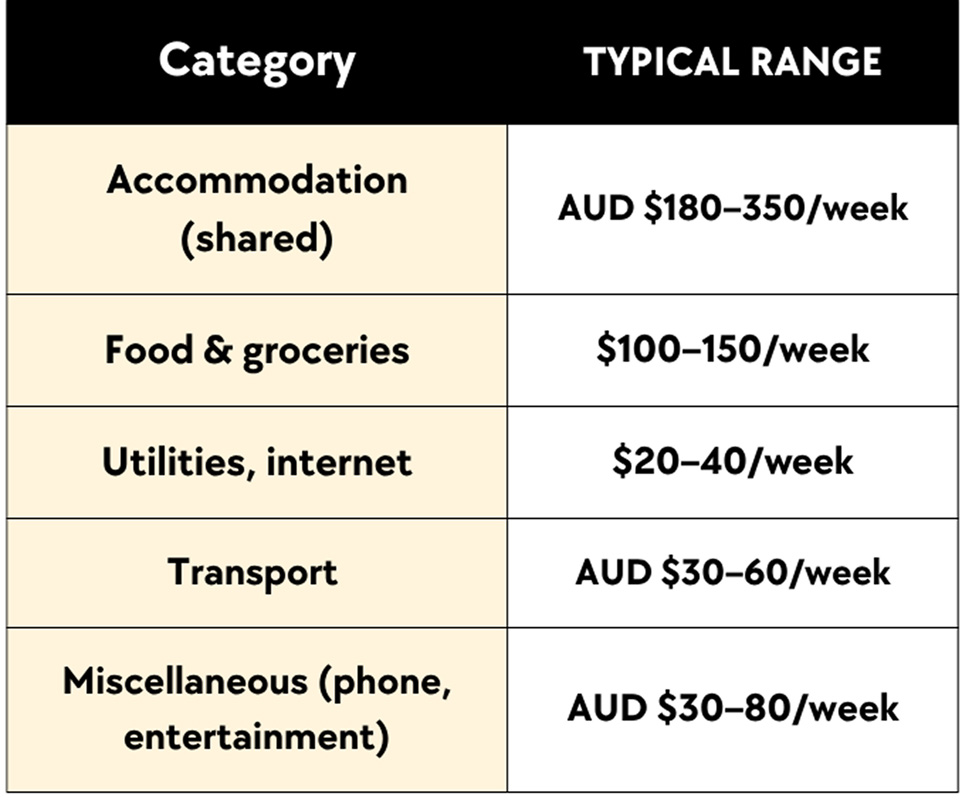
On average, international students spend between AUD $1,400 and $2,500 per month (excluding tuition) depending on city and preferences.
For visa purposes, you need to show proof of AUD $29,710 per year for living costs.


Expense breakdown (estimates)

💡 Budgeting Tips
Use the Study Australia cost calculator to tailor your estimate
- Cook at home, share housing, use student discounts
- Limit eating out and travel when possible
- Save receipts and track your spending weekly
- If eligible, apply for part-time jobs (up to 48 hours per fortnight during study periods).
- Seek scholarships such as Australia Awards or Province Sud mobility programs , to help cover tuition and living costs.


🏠 Accommodation & Housing Options
Australia offers various housing styles to suit different budgets and preferences:
On-campus / University-managed housing
Some universities provide dormitories or village accommodation.
Example for UQ: shared room from AUD $219/week, single room around AUD $229, studio units ~AUD $439/week Study (see more)
Off-campus / Private rentals
Shared houses or apartments are common.
On the Gold Coast, many students rent rooms or flats through platforms like Flatmates or Facebook groups. (see: more experiencegoldcoast.com)
Homestay
Live with a host family, meals included, cultural immersion.
Often arranged through language schools such as ELC or specific homestay coordinators.
Check ELC accomodations


🌆 City Life: Experience the Gold Coast
The Gold Coast, one of Australia’s fastest-growing cities, combines beautiful beaches, modern campuses, and affordable living.
It’s a leading education hub with three major universities, 130+ nationalities, and a reputation as one of the world’s most welcoming cities (Booking.com, 2023).
Students enjoy:
-
A balance of study and leisure, with beaches, hiking trails, and nightlife
-
Great transport connections (trams, buses, and two nearby international airports)
-
A warm, sunny climate and a strong sense of community
-
The Gold Coast Student Hub: a free space for international students offering Wi-Fi, study areas, events, and guidance
📍 Learn more: Experience Gold Coast –Study Life
✨ If you’re interested in discovering other Australian study destinations such as Sydney, Melbourne, or Brisbane, visit the official Study Australia website for more city guides and comparisons.
🧳 Settling In and Adapting
Moving to Australia can feel overwhelming at first, but universities and cities provide strong support to help you adjust.
🎓 Orientation Week
Each university organises tours, workshops, and social events to help new students settle in, meet others, and discover campus life.
💬 Student Support
International student advisors can help with visas, housing, and academic questions. Most universities also offer free mental health services and tutoring programs.
🤝 Join the Community
The best way to adapt is to get involved join student clubs, sports teams, or volunteering groups. The Gold Coast Student Hub also provides free Wi-Fi, study spaces, events, and advice for all international students.
Remember: You’re never alone, from arrival to graduation, student services and friendly communities are here to support you.
📍 Learn more: experiencegoldcoast.com/study | studyaustralia.gov.au/life-in-australia
🎯 Tips & Final Thoughts
- Get involved in clubs, societies, and on-campus events, they help you make friends and find support
- Start planning early: housing, finances, English tests
- Use campus support services (counseling, academic help, health services)
- Practice English daily: engage with locals, speak in class
- Be flexible and open-minded adapting to a new country takes time but enriches your experience